(616) 370-4254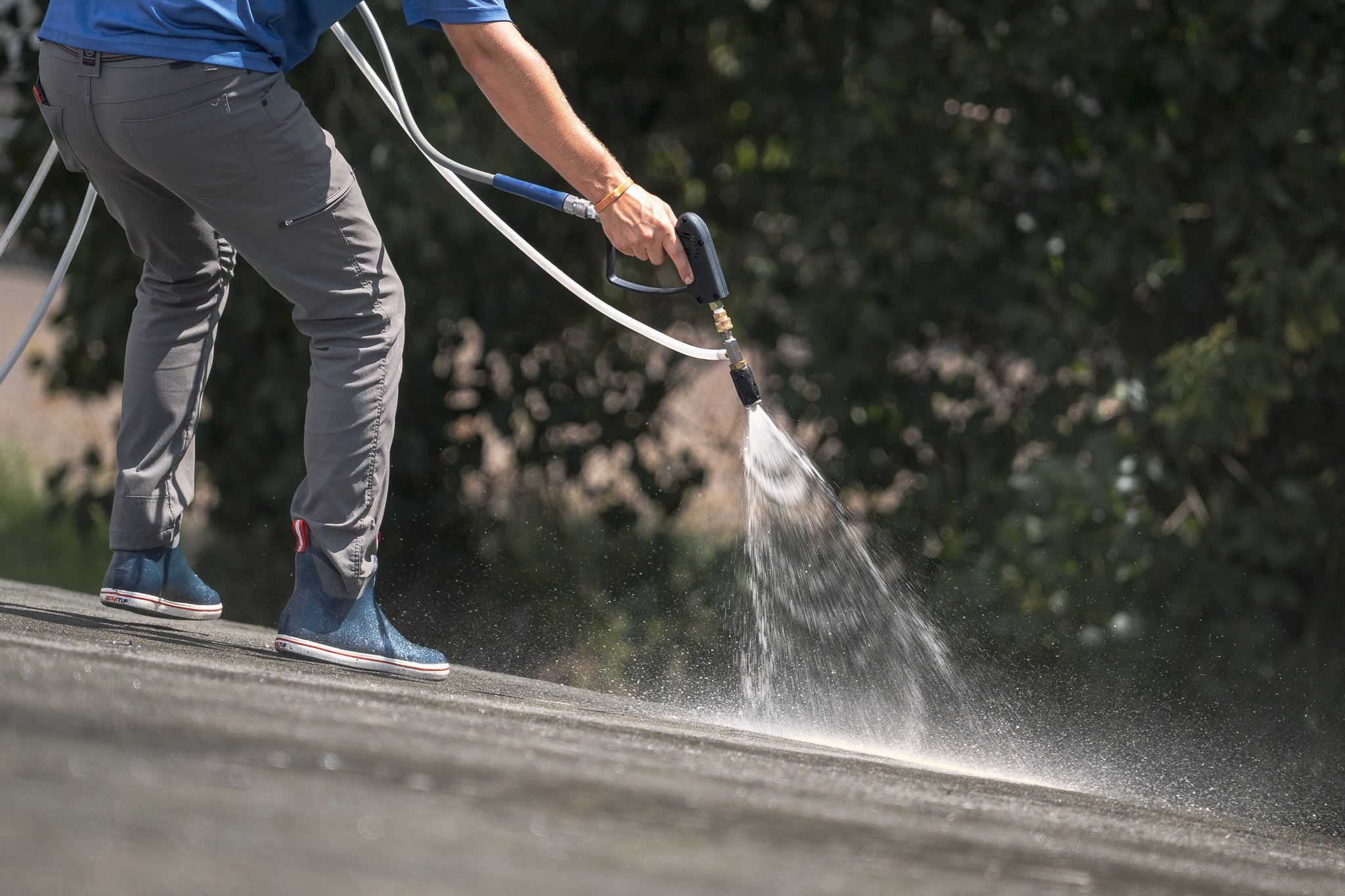
Soft Washing vs Pressure Washing: When to Use Each on Your Home

They Look Similar From the Driveway. They Are Not the Same Job.
Both methods spray water and clean the outside of your home. That is where the similarity ends. One uses brute pressure to blast dirt off a hard surface. The other uses low pressure and a cleaning solution to kill what is actually growing on your siding, roof, or fence.
If a contractor uses the wrong one on the wrong surface, the damage can be expensive. Pressure washing a roof can knock granules off your shingles. Pressure washing siding the wrong way can force water behind the panels and into your wall cavity. And pressure washing a moldy roof might look clean for a month, but the algae will be back before fall because the cleaning never reached the root.
Here is how the two methods actually compare, and how I decide which one to use on a job.
What Soft Washing Is
Soft washing uses water at low pressure (around the same force as a garden hose, well under 500 PSI) combined with a cleaning solution that breaks down mold, mildew, algae, and bacteria. The solution does the cleaning. The water rinses it.
Because the solution kills the growth at the root and not just on the surface, your home stays clean longer. This is the method I use on almost every vinyl, aluminum, painted wood, stucco, and shingled surface on a house.
What Pressure Washing Is
Pressure washing uses high-pressure water (typically 1,500 to 4,000 PSI) to physically blast dirt, grime, and stains off a hard surface. There is usually no cleaning solution involved, just water and force.
That force is the right tool for concrete, brick, pavers, and other surfaces built to take it. It is the wrong tool for anything you would not want to stand directly under.
Side By Side
| Soft Washing | Pressure Washing | |
|---|---|---|
| Water pressure | Around 100 to 500 PSI | 1,500 to 4,000 PSI |
| What does the cleaning | Cleaning solution | Water force |
| Removes organic growth | Yes, at the root | Surface only |
| Best for | Siding, roofs, soffits, fences, screens | Concrete, brick, pavers, driveways |
| Risk to delicate surfaces | Low | High |
| How long results last | One to two years on average | A few months for organic growth |
When Each One Is the Right Call
Soft wash this: house siding, roof shingles, soffits and fascia, painted wood, fences, screens, dryer vents, exterior light fixtures. Anything porous, painted, or organic.
Pressure wash this: concrete driveways, sidewalks, garage floors, pavers, brick patios, retaining walls. Anything hard and unpainted.
There is a middle ground too. A driveway with deep oil staining might need a pressure wash followed by a soft wash treatment to keep mildew from coming back along the seams. A brick chimney with algae might get the same combination. Most jobs are not all of one or the other.
Why I Lean on Soft Washing for Homes
After ten years of soft washing in West Michigan, I have seen what high pressure does to a vinyl home that did not need it. Cracked panels. Water in the wall. Stripped paint. Black streaks back on the roof in six months because the cleaning never reached the root of the algae.
Soft washing leaves your house cleaner, longer, with less risk of damage. That is why I default to it on home exteriors and only reach for the pressure wand when the surface calls for it.
Not Sure Which One You Need?
Send a few photos and I will tell you straight what your home needs.
Pristine Soft Wash is locally owned and based in Hastings, serving Grand Rapids and greater West Michigan.